Merlot vs Cabernet: Unraveling The Taste Difference (& More)
Contents
- Main Differences Between Merlot And Cabernet
- What You Need To Know About Merlot
- The Origin
- Merlot’s Comeback
- Merlot’s Global Production And Its Distinct Characteristic Based On Region
- Taste Profile
- Merlot As A Blending Grape
- Nutritional Facts: Alcohol Content, Calories, And Carbs
- How To Serve Merlot
- Best Food Matches
- Merlot Alternatives
- Best Wine Glass For Merlot
- What You Need To Know About Cabernet
- The Origin
- Cabernet’s Global Production
- Taste Profile
- Best Food Matches
- Blending Cabernet Sauvignon
- How To Store And Serve Cabernet Sauvignon
- Cabernet Sauvignon Alternatives
- Nutritional Facts: Alcohol, Calories, And Carb Content
- Best Wine Glass For Cabernet Sauvignon
- FAQs: Notable Facts On Cabernet Sauvignon Vs. Merlot
- Which is better -- Merlot or Cabernet Sauvignon?
- Which is sweeter -- Merlot or Cabernet Sauvignon?
- Why is Merlot cheaper than Cabernet?
- Is Merlot or Cabernet healthier?
- Final Thoughts
- Sources
When there is a fast-approaching holiday celebration, many people face the confusion of having to browse through seemingly endless choices of bottles from different web pages.
Well…
It can be frustrating not to know which wine to pick. But what's even more stressful is reading various wine labels, seeing all the flavor notes description, and not understanding a single thing about it.
Like how often do you hear people argue about Cabernet vs. Merlot and what they think is the better option of the two? Which food makes the perfect match for either of them? If you find this all the more confusing, just as I once did, then you should keep reading this article.
This article aims to give all readers a working knowledge of the difference between Merlot and Cabernet. Learning more about these two well-loved wines will help us make the right choices for our next wine shopping.
Main Differences Between Merlot And Cabernet
The main differences between Merlot and Cabernet are:
- Merlot has softer tannins giving it a fruity taste, whereas Cabernet has more robust tannins that give it a firmer, drier grip.
- Merlot wines come in signature ruby red color, whereas Cabernet’s color is lush, deep red burgundy.
- Merlot is a medium- to full-bodied red wine with a plush, round texture, whereas Cabernet is usually fuller-bodied, with more structure and dark fruit flavors like black currant.
What You Need To Know About Merlot
The Origin
Aside from its name’s French origin that means “little blackbird,” Merlot is also a large and thin-skinned red grape from the Bordeaux region of France. This grape is relatively easy to grow, which makes it famous among wine producers. However, it makes its best wines only where conditions suit it.
Some of these conditions include a moderate climate and cool, clay-rich or well-drained soils conducive to slow, even ripening. All these are what it takes to have excellent grape production.
Wine producers do not encourage growing Merlot grapes in less optimal conditions because it will only yield wines that lack flavor concentration. It might still be appealing for those who look for something easy to drink, but then it falls short of Merlot’s true potential.
Merlot’s Comeback
It is not unknown to many how the wake of the "Sideways" backlash against Merlot had a severe impact on its popularity, production, and sales in the United States. As a result, it turned many wine producers and consumers away from Merlot for almost a decade.
The great news is that Merlot is back and seems like it’s here to stay. People nowadays no longer confuse its sweet and straightforward taste for lack of quality, and they start appreciating Merlot once again for its velvety, rich, and oaky flavor.
Merlot’s Global Production And Its Distinct Characteristic Based On Region
The number of regions in which it thrives is one of the many reasons why Merlot is an outstanding grape worldwide. Here are the regions that successfully grow Merlot grapes and the distinct characteristics the wine has for each of them:
- Bordeaux is home to Merlot grapes. Its Right Bank has clay and limestone soils that can yield grapes with more robust flavors. Outside this region, they grow Merlot throughout France’s southwest and often blend it with Cabernet Sauvignon.
- Tuscany is famous for Merlot grapes that are slightly larger and with lesser harsh tannins. They often feature Merlot as a varietal wine or blended with other varieties.
- Friuli-Venezia Giulia considers Merlot as the most-planted red grape in the region. Their produce has nuances of anise, spice, stone, and more.
- California has warm-climate regions like Napa Valley that can produce round and smooth grapes. Their varieties have a lush and fruity profile with vanilla, sweet spice, and new oak hints.
- Washington wine producers combine the best of the New World and the Old, resulting in Merlot's luscious flavors of cherry with a tinge of fresh acidity and a tannic bite.
- Chile has top-quality Merlot grapes that are equivalent to the fruity, bold California varieties.
- In Australia, you can identify Merlot's variants with their powerful fruit overtones and woody flavors. Currently, most of the country's grape growers are still learning the best regions for growing Merlot grapes.
Taste Profile
Merlot's red wine has that distinct flavor related to Cabernets’ but softer and ages more quickly. It is medium- to full-bodied and has a milder acidity than some grape varieties, including Cabernet Sauvignon. Most wine consumers find it an all-time crowd-pleaser because, in the battle between Merlot vs. Cab, Merlot has lesser tannic, making it easier to consume.
When you grow it in an ideal condition, it has the potential of being a very serious wine. Furthermore, Merlot can also adapt and take on the character of its location and winemaking process. Generally, its taste varies from that of blackberries and herbs to cocoa, black cherries, and plums, with a tinge of vanilla and cedar when aged in oak.
Merlot As A Blending Grape
There was a time when some grape growers dismiss Merlot as a "secondary" grape. They consider it ideal for blending but not as a stand-alone varietal because of Merlot’s versatility when combined with two or more of the following:
- Petit Verdot
- Carmenère
- Malbec
- Cabernet Sauvignon
- Cabernet Franc
Nutritional Facts: Alcohol Content, Calories, And Carbs
The region where it came from determines a Merlot’s alcohol content. The climate influences its ripeness, and in turn, the ripeness affects its alcohol levels. Those that came from cooler regions have 13.5% ABV (alcohol by volume,) while those from warm climates have 14.5% ABV.
Merlot has lesser or no sugar at all as a typically dry wine, but it does not mean that it is without calories. There are roughly 600 to 650 calories in a 750ml bottle of Merlot, or about 120 to 125 in a standard 5-ounce glass. If it comes with residual sugar, Merlot will most likely have carbohydrates or carbs but very minimal.
How To Serve Merlot
Most of us know that we should serve red wines at room temperature. However, people’s homes have varying temperatures, from hot summer days to chilly winter. Serving this wine warm will give it a bitter, muddled-like flavor that is overly alcoholic, while too much cold will mute its flavor and aroma.
So for Merlot, the best option is to serve it a bit cooler. Allow it to chill in the refrigerator for about 15 to 20 minutes, to roughly 60 to 65 degrees Fahrenheit. Once you open the bottle, let it set to give it time to aerate for at least ten more minutes before serving.
If you happen to have Merlot bottle leftovers, simply put back the cork and place it back in the refrigerator. You would still have two to four days before the flavors lose their freshness and start to oxidize.
Best Food Matches
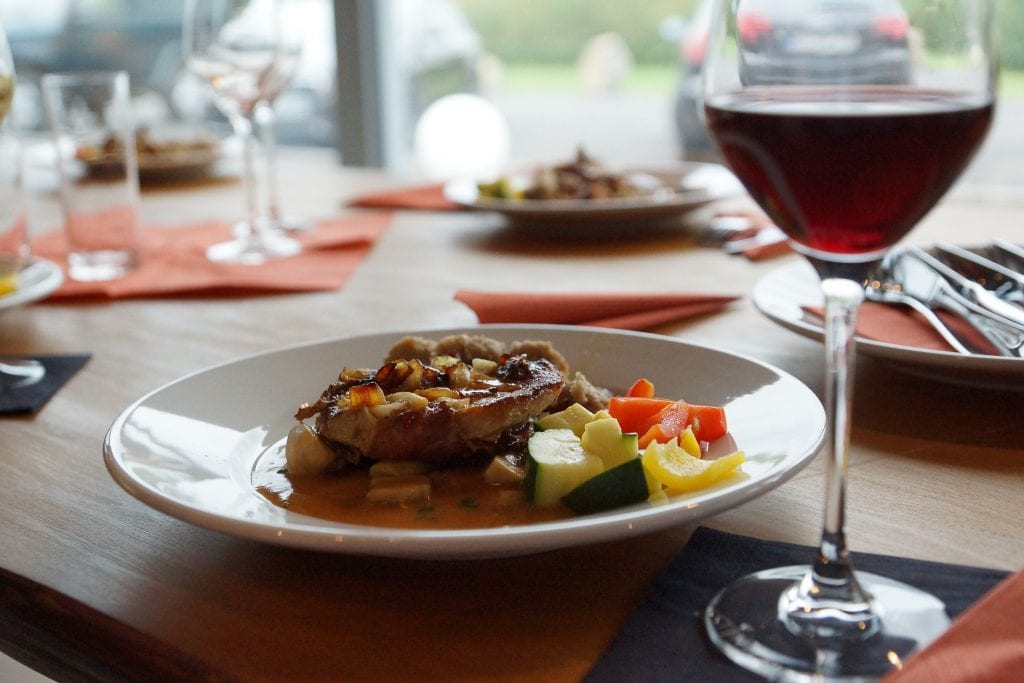
One of Merlot’s benefits of being an easy-to-drink type of wine is that it easily matches various foods. Here are some pairing suggestions you can take note of:
- Smoked vegetables like roasted bell peppers
- Cheddar, Brie, Gouda, Gorgonzola, and blue cheese
- Grilled or roasted beef, pork, or lamb
- Hearty bean dishes
- Pasta, burgers, and pizza
- Roasted chicken, mushrooms, and smoky foods
- Fresh or roasted fruits
- Any dark chocolate dessert, especially truffles
Merlot Alternatives
If you like Merlot, you might as well try the following too;
- Zinfandel
- Syrah
Best Wine Glass For Merlot
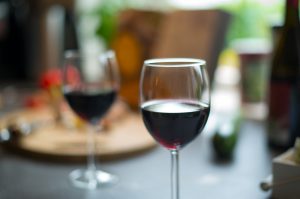
The kind of wine glass that’s best for Merlot is a large-bowled red wine glass that narrows slightly at the rim. The wide bowl gives the wine room to breathe, and the narrower rim focuses its aromas.
What You Need To Know About Cabernet
The Origin
Cabernet Sauvignon is one of the world's most widely planted red grapes. UC Davis DNA research showed it is a natural cross of Cabernet Franc and Sauvignon Blanc, and it was already growing in Bordeaux by the 17th century.
It is a distinctive grape variety that can grow well in various soil and climate conditions. Cabernet Sauvignon grape is preeminent for its thick skin and durable vines that are highly resistant to elements. Its wine is tannic, has a deep blue color, ages, and blends well with other grape varieties.
Cabernet’s Global Production
The Cabernet Sauvignon grows in warmer climates with plenty of sunshine, such as Chile, Romania, Australia, Italy, South Africa, and Argentina. Winemakers have no trouble cultivating them due to their remarkable resilience, which is why it also grows well in the following:
- Tuscany
- California
- Washington
Taste Profile
If you’re still confused about the Merlot vs. Cabernet Sauvignon taste profiles, it is worth noting that Cab has the higher tannin level of the two that gives a dry mouthfeel in every sip.
It has a powerful imprint of black currants, cherries, cedar, and mint. The wine also has prominent notes of leather, dried herbs, and tobacco as it ages, giving way to more subtle flavors. On the other hand, aging it in oak adds a woody, vanilla dimension to the wine.
Best Food Matches
Pairing wine with food doesn’t need to be a complicated process. The perfect food pairing for Cabernet Sauvignon is the following:
- High protein, fatty food
- Fillet steak
- Red meat (such as a prime rib, steaks, sausages, and even a hearty beef burger)
- Strong cheeses like Stilton and Gruyère
- Traditional Korean-style beef stir-fried in garlic, soy, and sesame
- Lebanese fried mushrooms with garlic and spices
Blending Cabernet Sauvignon
Cabernet Sauvignon is versatile enough to be a stand-alone wine, and at the same time, it also makes a popular blend for the following grape varieties:
- Malbec
- Petit Verdot
- Cabernet Franc
- Sangiovese
- Tempranillo
- Carménère
- Shiraz
How To Store And Serve Cabernet Sauvignon
Storing Cabernet Sauvignon at a proper temperature is vital because it is a wine that ages so well. Keeping it at a temperature that's too warm would cause it to lose flavor prematurely. The ideal storing condition, especially for an age-worthy Cab, would be between 50 to 55 degrees, away from heat, light, and vibration, with moderate humidity.
Having a steady temperature is best when you are aging a wine. Investing in a suitable wine refrigerator can also help you have more storage options for aging wines.
Serve your Cab cooler than the average room temperature, at least 55 to 60 degrees, to avoid compromising its flavors. Allow it to sit in the refrigerator for about twenty minutes, remove the cork, and let the air mix with the drink for about an hour before serving.
Cabernet Sauvignon Alternatives
If you like Cabernet Sauvignon and you think about shaking your wine picks a bit, here are some great alternatives that you could try:
- Merlot
- Tempranillo
- Malbec
- Tannat
- Aglianico
- Mourvèdre
- Carmenere
- Nero D’Avola
Nutritional Facts: Alcohol, Calories, And Carb Content
Although wines came from grape juice, yeast fermentation converts the sugar content into alcohol. If you’re health-conscious or trying to manage your weight, note that Cabernet Sauvignon is low in carbs, at about 3.8 grams per 5-ounce serving, but most of its roughly 120 calories come from alcohol, and most Cabernets run 13.5% ABV or higher.
Best Wine Glass For Cabernet Sauvignon
The best kind of glass to use for Cab is a large, tall glass with a broad bowl that closes slightly at the glass opening so that it reaches its full flavor potential. This kind of wine glass does wonders in enhancing the wine’s aroma.
FAQs: Notable Facts On Cabernet Sauvignon Vs. Merlot
Which is better -- Merlot or Cabernet Sauvignon?
Both of these wines are great with various foods. They are technically dry, but of the two, Merlot is the one that's easiest to drink, while Cabernet is its more aggressive sibling.
I can't say that one grape is better than the other; it just happens that they have different characteristics. The better option of the two will depend on a wine consumer’s personal preference.
Which is sweeter -- Merlot or Cabernet Sauvignon?
Merlot has a sweeter taste of the two, although this still depends on the grape production’s location.
Why is Merlot cheaper than Cabernet?
The Cabernet is the pricier one because of its strong demand and its perceived higher stature among wine lovers. Merlot, on the other hand, is widely planted and usually yields generously, which helps keep everyday bottles affordable.
Is Merlot or Cabernet healthier?
Neither one is a health drink. Both are dry reds with little sugar, but the CDC notes that strong studies show no health benefit from moderate drinking compared with not drinking, so pick the one you enjoy and drink in moderation.
Final Thoughts
Cabernet and Merlot are very closely similar to one another, which is why having to choose between the two can be quite overwhelming. We have gone through an in-depth understanding of their origins, taste profiles, etc. so that you will have a quick reference when making your red wine comparisons.
Just remember, these wines’ differences are also what makes each of them unique. Hopefully, this will make the wine selection easier for you. May you have the best wine shopping experience!
Sources
- DNA Fingerprinting Reveals Parentage of Classic Wine Grape, UC Davis
- About Moderate Alcohol Use, CDC
- What Is a Standard Drink?, NIAAA
- 7 Tips for Storing Wine, Wine Spectator