Is Cabernet Sauvignon Dry or Sweet? Our Palates Decide!
Contents
- What is Cabernet Sauvignon?
- Carbernet Sauvignon vs Merlot
- Wine Styles
- Taste Profile
- Food Pairings
- Watch This!
- Frequently Asked Questions
- Is Cabernet Sauvignon sweeter than Sauvignon Blanc?
- Is Cabernet Sauvignon good for cooking?
- How do you serve Cabernet Sauvignon?
- Does the Cabernet Sauvignon have any health benefits?
- Conclusion
- Sources
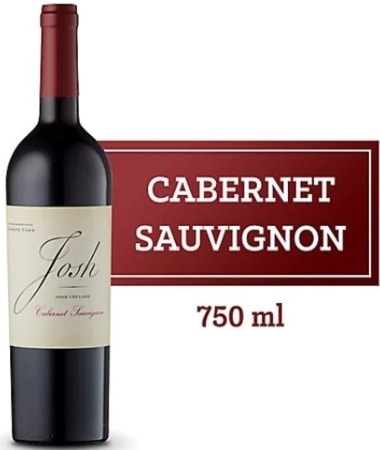
The Cabernet Sauvignon is one of the most well-known red wine varieties worldwide. While it is a dry wine, the Cabernet Sauvignon has a pleasant taste that makes it an excellent choice for casual drinking and food pairing.
However, is the Cabernet Sauvignon dry or sweet? The taste profile of this red wine could be confusing because it has a dry mouthfeel and, at the same time, delicious fruity and spicy flavors.
Let's begin studying this wine!
What is Cabernet Sauvignon?
The Cabernet Sauvignon is a red grape varietal originating from the Bordeaux region of Southwest France. It thrives in cool and warm climates of the Napa Valley in northern California, Chile, Argentina, Australia, and South Africa.
Cabernet Sauvignon is the reigning grape in the Napa Valley, where it is the most widely planted variety.
Napa's other well-known wines include Chardonnay, Merlot, Pinot Noir, Sauvignon Blanc, Zinfandel, Petit Verdot, Malbec, Cabernet Franc, and Syrah, also known as Shiraz, Petite Sirah, and Pinot Grigio, also known as Pinot Gris.
Carbernet Sauvignon vs Merlot
The Cabernet Sauvignon and Merlot grapes share a genetic parent in the Cabernet Franc vine. Both grapes are pillars of dry Bordeaux-style blends, alongside Cabernet Franc, Petit Verdot, and Malbec.
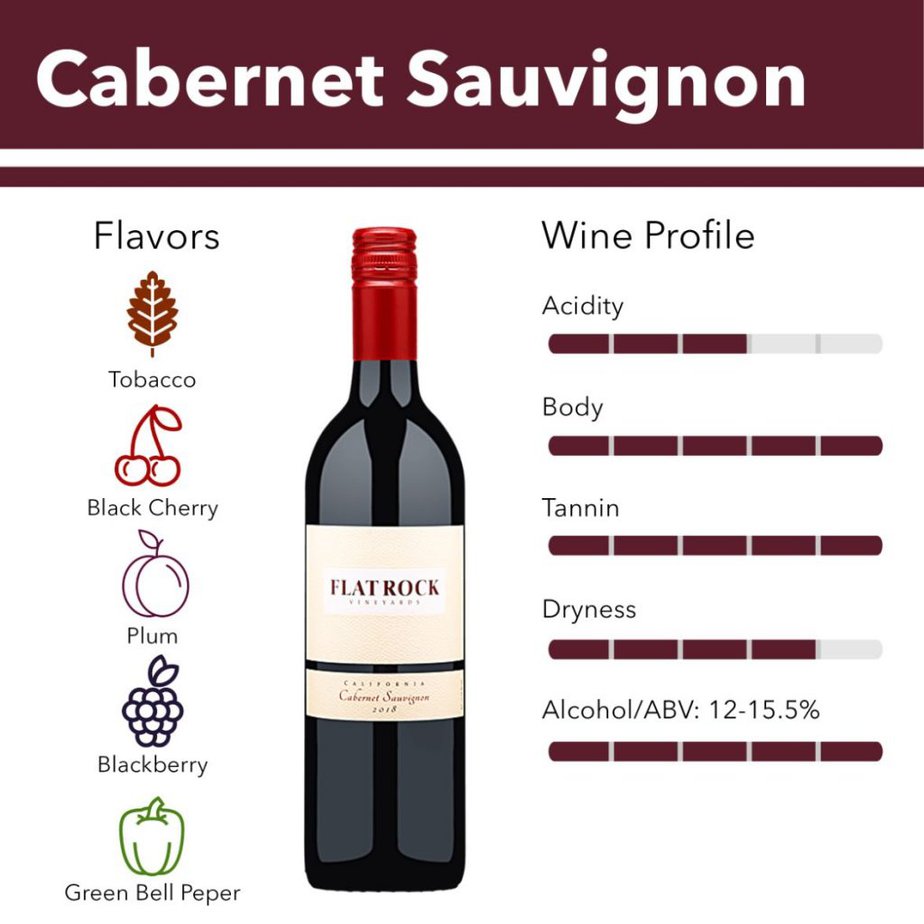
Cabernet Sauvignon
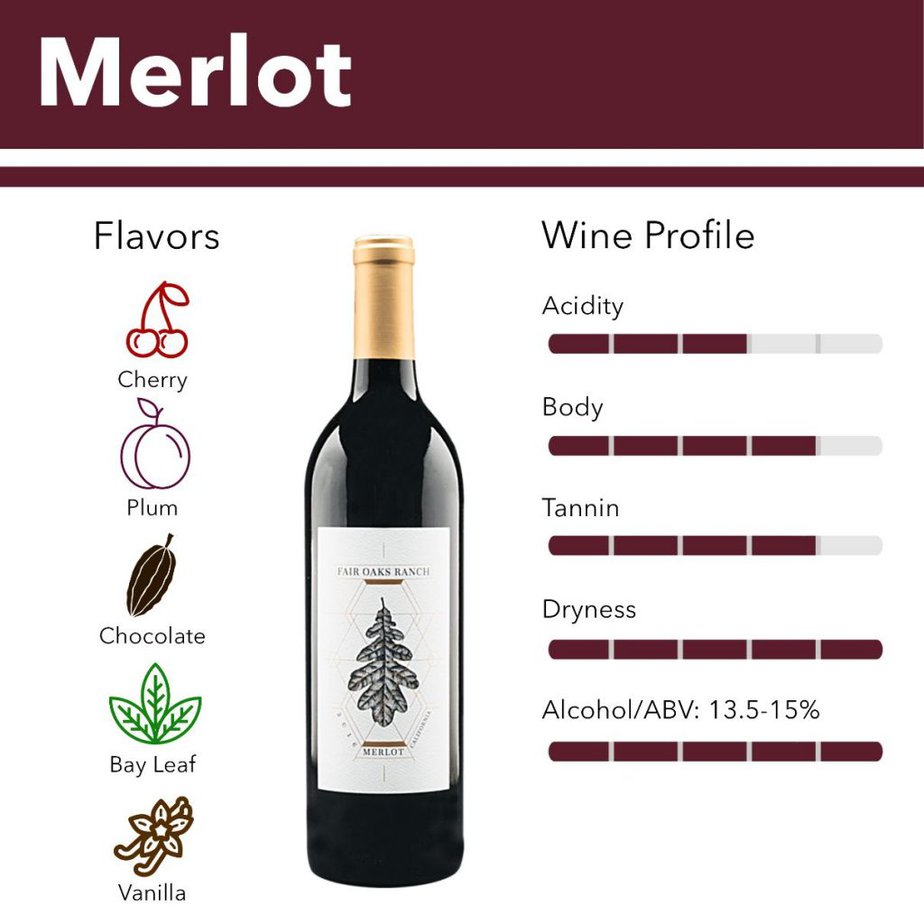
Merlot
Both are dry wines. Cabernet Sauvignon is firmer and more tannic, while Merlot is softer and plummier, which can make it taste a little sweeter.
Taste Test: Try another wine for curiosity. Read our post regarding the shelf life of probably one of the world's popular fortified wines: How Long Does Sherry Last.
Wine Styles
The Cabernet Sauvignon grows in almost every major wine-producing country and is currently the most widely planted red wine grape variety worldwide. However, it is a relatively young variety.
The grape is a natural cross between Cabernet Franc and Sauvignon Blanc, and it was growing in Bordeaux by the 17th century; hence, the name Cabernet Sauvignon.
It is an easy grape to cultivate as it thrives in various soil types and climate conditions, and its thick-skinned berries hold up well against rot. Additionally, it produces Cabernet Sauvignon wine with a consistent structure and complex taste profile, characteristics that contribute to its popularity.
However, climate shapes whether it shines as a single varietal wine or as a blending component. In warm New World regions like California, the grapes stay on the vines a little longer, which increases the ability to produce varietal Cabernet Sauvignon red wines.
In Old World places like Bordeaux, where they harvest grapes a little earlier due to inclement weather, the Cabernet Sauvignon grapes are blended with the Cabernet Franc, Merlot, Malbec, and Petit Verdot varieties to make the world-famous Bordeaux Blend wines.
Taste Profile

Due to early harvesting in cool climate wine-growing regions where the grapes are underripe, they produce Cabernet Sauvignon wines with blackcurrant, raspberry, strawberry, mint, and cedar notes.
In a moderate climate, the red wine produced will have black cherry and olive notes, while in warm regions, the flavors tend to be jammy as the grapes are ripe when harvested.
The Cabernet Sauvignon red wine also features some flavors and aromas resulting from the viticultural aspect of terroir. These include the green bell pepper flavor caused by the Pyrazine compound in underripe Cabernet Sauvignon grapes.
Grapes harvested early in cool climate regions such as Monterey, California, tend to have green bell pepper flavor.
Mint is another known flavor found in some Cabernet Sauvignon red wine styles from parts of Washington State and Coonawarra, Australia. While the source of the mint is debated, eucalyptus flavors appear in wines grown near Eucalyptus trees, such as parts of Australia and some California vineyards.
We also have to consider how the aging process affects the flavor and aroma of the wine. Cabernet Sauvignon typically has an affinity for oak, and that's where we get the wood and spice flavors of cedar, tobacco, vanilla, and clove to soften the high tannins.
As to the question is Cabernet Sauvignon dry or sweet, it is a dry red wine because it contains low levels of residual sugar. We can also describe this wine as bold due to its high alcohol and tannin levels.
Food Pairings
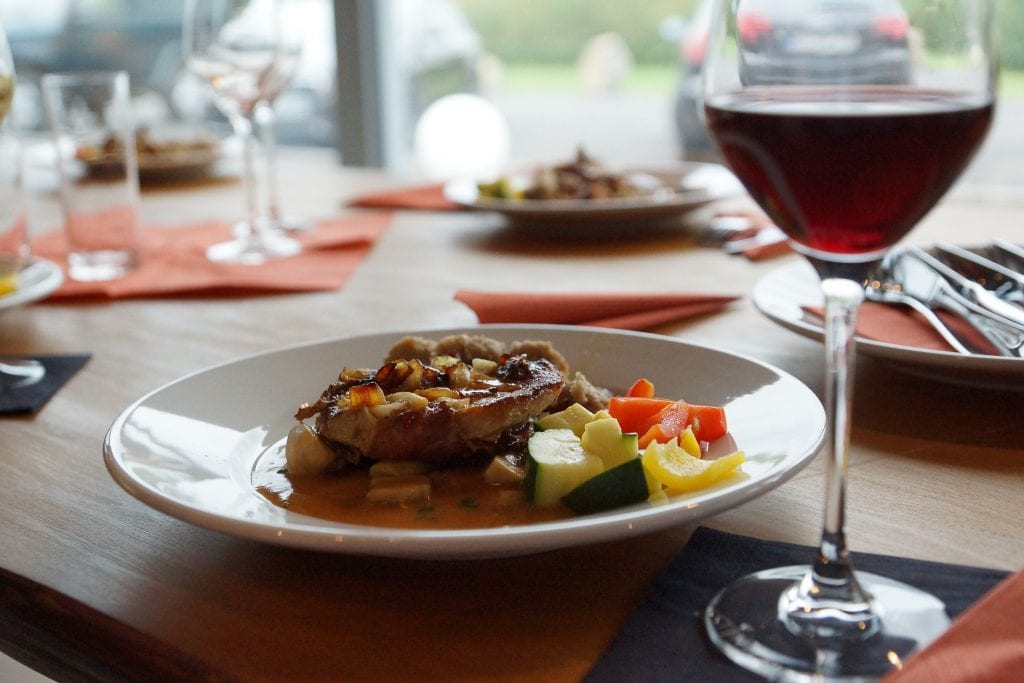
The Cabernet Sauvignon goes well with heavy meat dishes such as grilled steaks, lamb and pork chops, grilled poultry dishes, veal, and venison. The wine also pairs well with cheeses like aged Cheddar, Gouda, and blue cheese.
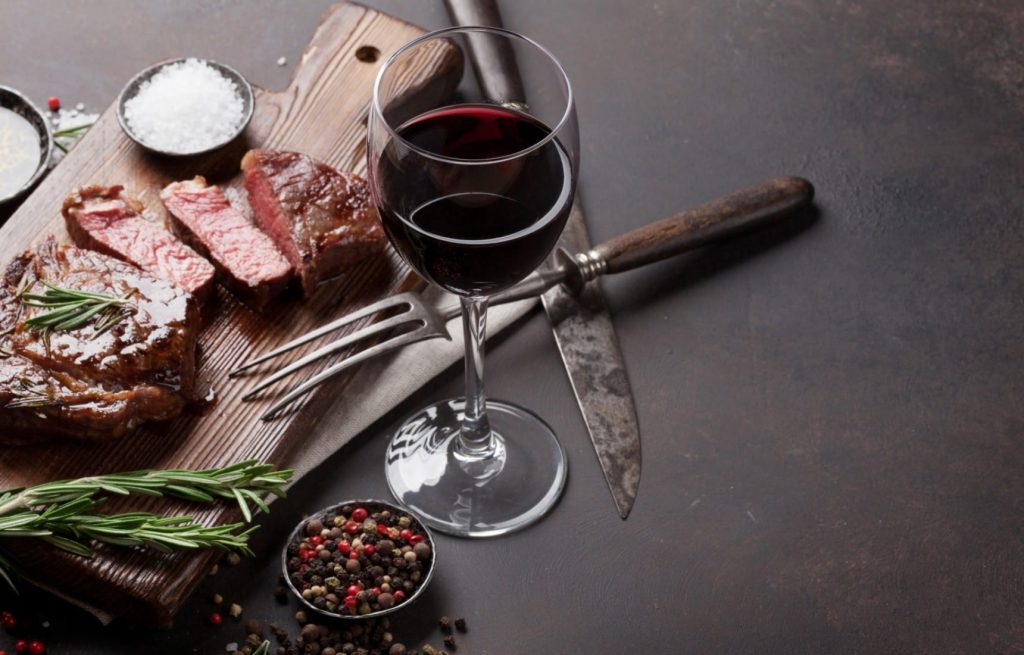
Steak and Red Wine
Additionally, you can combine this wine with mushrooms, eggplant, roasted tomatoes, and greens like radicchio and endive. Dark chocolate is a typical aroma bridge for dry red wines as it helps to balance off the astringency.
Dishes flavored with herbs and mild spices such as mint, rosemary, black pepper, basil, thyme, and oregano also pair well with Cabernet Sauvignon wine.
Watch This!
Frequently Asked Questions
Is Cabernet Sauvignon sweeter than Sauvignon Blanc?
No, the Cabernet Sauvignon is a genetic offspring of the Sauvignon Blanc and is a dry red wine as it has low amounts of residual sugar. The Sauvignon Blanc is a crisp, dry, and fragrant white wine with low levels of residual sugar.
Residual sugar is the sugar left behind in a finished wine after fermenting the grape juice. The sugar amount determines the sweetness of the red wine.
Dry red wines typically have less than about 4 grams per liter, while off-dry wines, such as some Rieslings, have roughly 4 to 12 g/L. For comparison, a sweet wine such as a port has more than 45g/L.
Is Cabernet Sauvignon good for cooking?
Yes, Cabernet Sauvignon works well in hearty dishes like beef stew, braised short ribs, and pan sauces for steak. Its tannins soften as it cooks down.
Skip expensive or heavily oaked bottles, though. A moderately priced dry Cabernet you would happily drink is the best choice.
How do you serve Cabernet Sauvignon?
The Cabernet Sauvignon taste is better when left to breathe in a decanter for 30 to 60 minutes, depending on your taste. Breathing helps open up the flavor and aroma of the wine to its full potential. The wine is best served slightly below room temperature, around 60 to 65 degrees F.
Does the Cabernet Sauvignon have any health benefits?
Older studies linked moderate red wine drinking to some health benefits, but newer research has challenged that view. The CDC says there aren't health benefits of moderate drinking compared to not drinking, and even low levels of alcohol can raise the risk of certain cancers.
Red grapes do contain antioxidants such as resveratrol, but a glass of wine holds only small amounts. If you don't drink, health is not a reason to start.
Conclusion
Cabernet Sauvignon is one of the best-known red wines, with Merlot and Pinot Noir following closely behind. It is grown in nearly every major wine-producing country and comes in various styles depending on the region.
Most red wines are dry, with varying acidity and tannin levels; sweet reds like Port are the exception. The dryness and high tannin make Cabernet Sauvignon an excellent choice for pairing with rich meat dishes, hard cheeses, and dark chocolates.