Shiraz vs Cabernet: The Right Path To Making The Right Choice
Contents
- Main Differences Between Shiraz vs Cabernet Sauvignon
- All That You Need To Know About Shiraz
- The Origin
- Grape Production And Characteristics
- Nutritional Facts: Alcohol, Calorie, and Carb Content
- Best Food Matches
- Shiraz Alternatives
- Blending Shiraz
- How To Store And Serve Shiraz
- What You Need To Know About Cabernet
- The Origin
- Cabernet’s Global Production
- Taste Profile
- Best Food Matches
- Blending Cabernet Sauvignon
- How To Store And Serve Cabernet Sauvignon
- Cabernet Sauvignon Alternatives
- Nutritional Facts: Alcohol, Calories, And Carb Content
- Frequently Asked Questions
- Understanding The Difference Between Shiraz And Cabernet
- Is Shiraz Stronger Than Cabernet Sauvignon?
- Is Shiraz More Dry Than Cabernet?
- Which Is Better -- Shiraz Or Cabernet?
- Key Takeaways
- Sources
So you’re not a sommelier. But that doesn’t mean you have to keep pretending to know more about that drink you’re swirling in your glass for almost half an hour now. You can even say goodbye to those days when you thought that the cool calligraphy in your wine label meant that it’s fancy.
Also...
You no longer have to wonder which wine is better between Shiraz vs Cabernet.
If you’re looking for ways to make the wine selection process a less tedious one for you, then congratulations!
You just landed on the right page.
Together let’s explore the wonderful world of wines as we learn more about the striking resemblance or differences between syrah vs. Cabernet. Which one of these two should you pick for New Year’s eve? Let’s find out!
Main Differences Between Shiraz vs Cabernet Sauvignon
So what’s the difference between Shiraz and Cabernet?
- Shiraz has that aroma of pepper, spice, meat, and smoke, whereas Cabernet Sauvignon has the fragrance of leather, mint, cassis, and blackberry.
- Shiraz usually feels juicier and spicier, whereas Cabernet Sauvignon has firmer tannins and more structure.
- Shiraz has a deep and succulent mid-palate, whereas Cabernet Sauvignon has a soft mid-palate, with a more dominant front and finish.
All That You Need To Know About Shiraz
The Origin
The first crucial thing we need to know is that Shiraz and Syrah are precisely the same! Although depending on the origin, the wines they produce can have different styles. Lighter wines come from the old-world Syrah, while decadent, full-bodied wines come from the new world.
Rhône Valley, France, is the home to the great grape variety Syrah, which now grows in different countries, including Australia, California, Washington, Italy, and Spain. The grape variety coming from France is what most people refer to as the old-world Syrah. On the other hand, the one coming from Australia is what people know as Shiraz.
DNA typing in the late 1990s showed that Syrah is the offspring of the Dureza and Mondeuse Blanche grape varieties. Some consider it an extraordinary pairing since these two ancient varieties were never prevalent on their own, and there was no genetic connection between them.
Grape Production And Characteristics
Full-bodied, bold, with black fruit and pepper spice, and a tinge of smoky fragrance are the characteristics that define Shiraz aside from being famous for its dark color. It is flavorful in the opening palate, but it ends with a softer finish.
Regardless of the common perceptions on this grape variety's varying taste profile, the truth is, it is dependent on the region and climates where they grow. Those that grow in warm climates yield lush, juicier, and fruit-forward characteristics with soft tannins. The grapes coming from cooler climates make wines with more acidity, peppery spice, and earthy, savory elements.
Oak-aged Shiraz picks up vanilla and baking spice flavors. Since these grapes have thick skins, some winemakers cold soak the crushed grapes for a few days before fermentation. This form of maceration draws out color and flavor before much tannin is extracted.
Nutritional Facts: Alcohol, Calorie, and Carb Content
It is no secret how wine drinkers will use any excuse just to have that glass of wine. But here are some nutritional facts you need to be aware of for those fond of or planning to binge on a few glasses of Shiraz:
Shiraz often runs 13.5% to 15% alcohol, with about 84 calories per serving of 100 ml. That works out to roughly 125 calories in a standard 5-ounce glass, plus about 3.8 grams of carbs.
Generally, fortified wines or those that taste naturally sweet have higher residual sugar and, therefore, have higher carbohydrates.
Best Food Matches
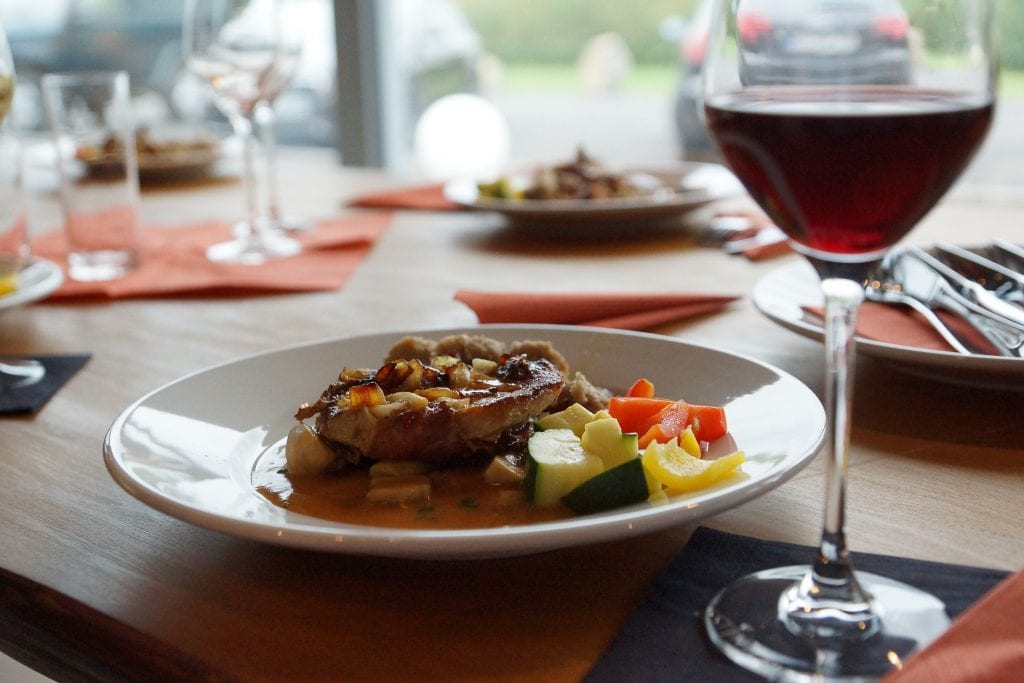
In wine-food pairing, you should keep in mind that it's all about domination and intensity. Foods generally have more components than wine depending on the ingredients and cooking method, so the rule of thumb is to consider the most dominant food element when matching it with wine.
A mature beef brings out the fruitiness in a vintage Syrah, and the gentle spices in Moroccan dishes also work well with it. Shiraz is an excellent bottle to have with earthier red meat dishes, and it will complement the following meals:
- Baked beans
- Red beans with rice
- Barbecued brisket
- Beef bourguignon
- Prime rib
- Roast
- Short ribs
- Burgers
- Chops
- Curry
When drinking Shiraz, it is best to avoid seafood like sole, shrimp, or lobster, delicate, and too sour dishes.
Shiraz Alternatives
If you like Shiraz/Syrah, you will also enjoy the following wines:
- Châteauneuf-du-Pape
- Nero d’Avola
- Priorat
- Toro
- Zinfandel
Blending Shiraz
Most of the wines we know nowadays are blends of some kind. Blending different grape varieties is common among winemakers and consumers because it results in more affluent, tastier wines.
Cabernet and Shiraz are two varieties that complement each other beautifully, which is why they are usually blended. In Southern Rhône, Shiraz is often part of a blended wine with Grenache and different varieties.
Sangiovese wine's savory nature also results in a complex, spicier, and richer wine once you blend it with a robust wine like Shiraz.
How To Store And Serve Shiraz
To enjoy your Shiraz wine, make sure that you store it at 14°C, while its drinking temperature should be 18°C. Minimize exposure to oxygen, so do not forget to re-cork it after a glass pour. Storing an opened bottle upright can also help minimize oxygen exposure. Keeping and serving Shiraz at optimal temperature will ensure that your wine is luscious and with more balanced acidity.
What You Need To Know About Cabernet
The Origin
Cabernet Sauvignon is one of the world's most widely planted red grapes. UC Davis DNA research showed it is a natural cross of Cabernet Franc and Sauvignon Blanc, and it was already growing in Bordeaux by the 17th century.
It is a distinctive grape variety that can grow well in various soil and climate conditions. Cabernet Sauvignon grape is preeminent for its thick skin and durable vines that are highly resistant to elements. Its wine is tannic, has a deep blue color, ages, and blends well with other grape varieties.
Cabernet’s Global Production
The Cabernet Sauvignon grows in warmer climates with plenty of sunshine, such as Chile, Romania, Australia, Italy, South Africa, and Argentina. Winemakers have no trouble cultivating them due to their remarkable resilience, which is why it also grows well in the following:
- Tuscany
- California
- Washington
Taste Profile
If you’re still confused about the merlot vs. Cabernet sauvignon taste profile, it is worth noting that Cab has a higher tannin level and gives a dry mouthfeel.
It has a powerful imprint of black currants, cherries, cedar, and mint. The wine also has prominent notes of leather, dried herbs, and tobacco as it ages, giving way to more subtle flavors. An oak-aged Cab, on the other hand, has more pronounced notes of wood and vanilla.
Best Food Matches
Pairing wine with food doesn’t need to be a complicated process. The perfect food pairing for Cabernet Sauvignon is the following:
- High protein, fatty food
- Fillet steak
- Red meat (such as prime rib, steaks, sausages, and even a hearty beef burger)
- Strong cheeses like Stilton and Gruyère
- Traditional Korean-style beef stir-fried in garlic, soy, and sesame
- Lebanese fried mushrooms with garlic and spices
Blending Cabernet Sauvignon
Cabernet Sauvignon has the adaptability of being a stand-alone wine while also being a popular blend for the following grape varieties:
- Malbec
- Petit Verdot
- Cabernet Franc
- Sangiovese
- Tempranillo
- Carménère
- Shiraz
How To Store And Serve Cabernet Sauvignon
Storing Cabernet Sauvignon at a proper temperature is vital because it is a wine that ages so well. Keeping it at a temperature that's too warm would cause it to lose flavor prematurely. The ideal storing condition, especially for an age-worthy Cab, would be between 50 to 55 degrees, away from heat, light, and vibration, with moderate humidity.
Serve your Cab cooler than the average room temperature, at least 55 to 60 degrees, to avoid compromising its flavors. Allow it to sit in the refrigerator for twenty minutes, remove the cork, and let the air mix with the drink for an hour before serving.
Cabernet Sauvignon Alternatives
If you like Cabernet Sauvignon and you think about shaking your wine picks a bit, here are some great alternatives that you could try:
- Merlot
- Tempranillo
- Malbec
- Tannat
- Aglianico
- Mourvèdre
- Carmenere
- Nero D’Avola
Nutritional Facts: Alcohol, Calories, And Carb Content
Although wines came from grape juice, yeast fermentation converts the sugar content into alcohol. If you’re health-conscious or trying to manage your weight, note that Cabernet Sauvignon is low in carbs, at about 3.8 grams per 5-ounce serving, but most of its roughly 120 calories come from alcohol, and most Cabernets run 13.5% ABV or higher.
Taste Test: Enough of Cabernet for now! We want you to try Merlot instead and compare this with Shiraz. What would you choose among the three wines? Read our wine comparison post between Shiraz and Merlot here -- Shiraz vs Merlot: A Comprehensive Guide For An Effortless Wine Selection.
Frequently Asked Questions
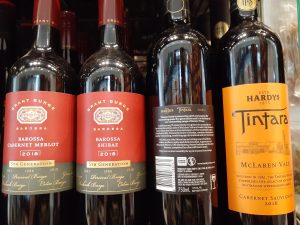
Understanding The Difference Between Shiraz And Cabernet
Is Shiraz Stronger Than Cabernet Sauvignon?
Often, yes, in fruit intensity and alcohol: warm-climate Shiraz bursts with ripe fruit and can be high in alcohol. Cabernet Sauvignon, though, usually has the firmer, more intense tannins.
Is Shiraz More Dry Than Cabernet?
Both Shiraz and Cabernet are almost always made dry, so they usually share the same medium dryness level; Cabernet's firmer tannins can make it feel a little drier.
Which Is Better -- Shiraz Or Cabernet?
Shiraz has this excellent dark fruit taste, but the French ones can be very costly. On the other hand, Cabernet can be a brilliant choice if you plan to serve heavy dishes like grilled steak or braised beef.
Key Takeaways
Both of these grape varieties are famous for yielding great wines. However, Cab is more accessible in the marketplace nowadays than Syrah. Having a wide range of selections also means you will have more chances of ending up with a good bottle. But either way, you can’t go wrong in choosing any of these two wines.
Knowing their fundamental differences, taste profiles, alcohol levels, and more can enhance your overall dining experience. A more profound understanding of these wines will give you a better idea of what specific wine is more appropriate for different occasions.
Never be afraid of experimenting, especially with wines you haven’t tried yet. Aside from learning the basics, trying out wines with different food is one effective way to figure out the best one to choose.
Sources
- DNA Fingerprinting Reveals Parentage of Classic Wine Grape, UC Davis
- What Is a Standard Drink?, NIAAA
- 7 Tips for Storing Wine, Wine Spectator