Unfortified vs Fortified Wine: How Are They Created & What Are the Benefits You Can Get
Contents
- Main Differences Between Fortified Vs Unfortified Wine
- Unfortified Wine
- Fortified Wine
- How Fortified Wine Is Made
- Types of Fortified Wine
- Frequently Asked Questions
- What foods are paired with fortified wine?
- What are the benefits of drinking fortified wine?
- Are there risks in drinking fortified wine?
- Final Remarks
- Sources
Picture this: You're at home, reading the latest issue of Wine Spectator while drinking your favorite table wine when you suddenly come across the term "fortified wine."
And you wonder, because…
If you're a beginner who doesn't know much of the technical terms, you might ask, "What is fortified and unfortified wine? Aren't they wine just the same?"
Although that's partially right, knowing the differences between fortified and unfortified wines is crucial, especially if you're trying to control your alcohol consumption.
Well then, let's put those questions to rest, shall we?
Main Differences Between Fortified Vs Unfortified Wine
The main differences between Fortified Vs Unfortified Wine are:
- Unfortified wine usually has an ABV of about 15% or less, whereas fortified wine usually runs from about 15% to 22%
- Unfortified wine is made by fermenting grape juice, whereas Fortified wine includes adding a spirit to make the alcohol stronger
- Unfortified wine allows the yeast to consume the sugar, whereas Fortified wine may kill the yeast to produce a sweet hint
Unfortified Wine
First off, what is unfortified wine? To put it simply, it's what you would imagine as a "normal wine."
It's an alcoholic beverage produced from the standard winemaking process - yeast consumes the sugar in the grapes and undergoes alcohol fermentation, releasing ethanol and carbon dioxide.
The end result is nothing short of a fermented grape juice, which is essentially unfortified wine.
However, there's more to it - this type of wine is classified primarily by its alcohol content, also known as alcohol by volume (ABV). Most unfortified wines land below about 15% ABV, and some are much lower: Moscato d’Asti is only around 5% to 6%.
This means your favorite red wine like Pinot Noir, white wine like Sauvignon Blanc, and sparkling wine like Moscato d’Asti are all unfortified wines.
Fortified Wine
Moving on, what does fortified wine mean?
Suppose we can determine unfortified wine from its alcoholic content. How do we compare unfortified vs fortified wine using the same basis?
The definition of "fortify" is "to strengthen," so there must be something strengthening the wine.
That "thing" is called a distilled spirit, another type of alcohol (usually pure brandy). By adding more alcohol to the wine, it naturally becomes stronger.
Fortification became widespread among wine merchants in the 17th and 18th centuries. During this time, the wine storage conditions weren't as ideal as the present. So, they came up with a solution and found that increasing the alcohol content improves the shelf life of their products.
Centuries later, adding spirits isn't just used for storage, but also for making stronger, often sweeter, styles of wine.
According to the North Carolina Alcoholic Beverage Control (ABC) Commission, "fortified wine" means any wine with 16% ABV minimum and 24% ABV maximum.
How Fortified Wine Is Made
As mentioned, wine is fortified simply by adding distilled spirits into it.
The spirit is usually a neutral grape spirit distilled from wine, so it adds alcohol without much flavor of its own.
During the fortification, the time at which the spirit is added changes the taste of the fortified wine.
Suppose the spirit is added before the fermentation process of the wine ends. In that case, the jump in alcohol stops the yeast before it finishes, which leaves natural grape sugar in the wine. This results in a sweet fortified wine, such as Port.
Meanwhile, if the spirit is added after the fermentation process ends, the yeast has already consumed most of the sugar content from the grapes. The result is a dry fortified wine, such as a Fino Sherry.
Don't worry, though. A well-made fortified wine should not taste of raw spirit; aging helps the alcohol blend in.
Fun Fact: Did you know that brewing wines and growing grapes are related but unique by themselves? Understand their similarities and dissimilarities by proceeding to our article here -- Winery vs Vineyard.
Types of Fortified Wine
Among the different kinds of fortified wines, here are some of the more well-known varieties:
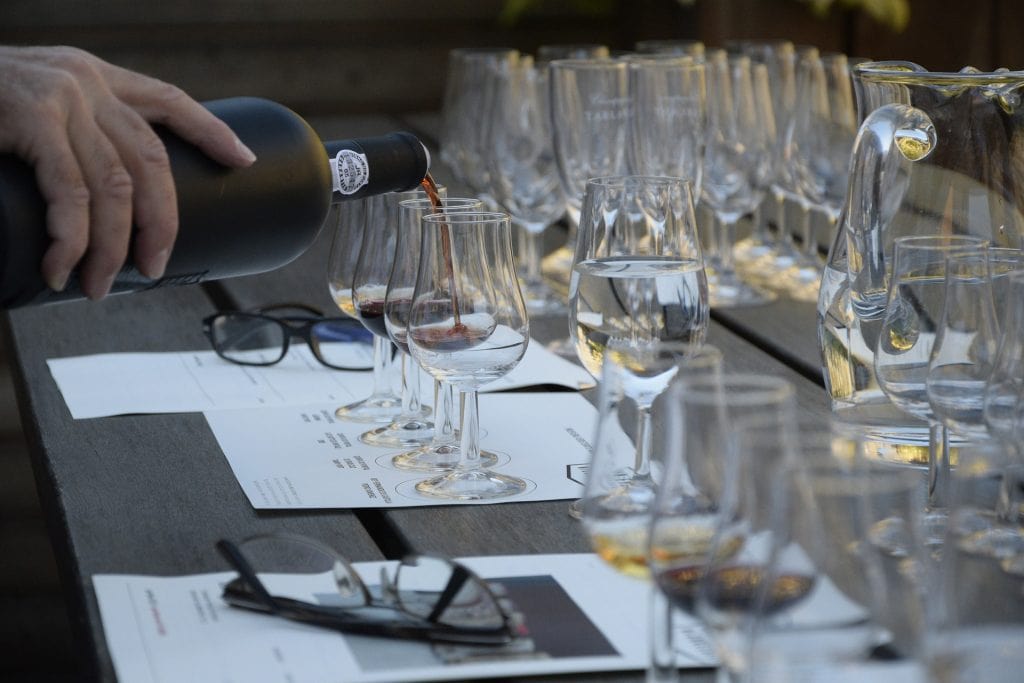
- Port wine - Originating from the Douro Valley in Portugal, this sweet dessert wine comes in different forms: ruby, white, rosé, and tawny port.
- Madeira wine - From the country of Portugal again is the Madeira wine, which is known for its unique process of wine heating. Different types of Madeira range from dry to sweet.
- Sherry - Sherry is a fortified white wine produced in Spain made from the Palomino, Muscat, or Pedro Ximenez grape. It's traditionally dry but can be sweetened as a dessert.
- Vermouth - This aromatized, fortified wine originated from Turin, Italy. It's predominantly divided into white (dry) and red (sweet), used in classics such as the Martini and Manhattan, respectively.
- Marsala wine - Another fortified wine from Italy is the Marsala, made from Sicilian indigenous grapes. Both sweet and dry varieties are commonly used for cooking.
- Vin Santo - Also known as "Holy Wine," Vin Santo is often listed with fortified wines, but it is usually not fortified at all. It is a Tuscan dessert wine made from dried grapes, known for its intense hazelnut and caramel flavors. In Italy, it is traditionally paired with biscotti.
Taste Test: Now that you have an understanding of unfortified and fortified wines, we would like to proceed further with a topic that will help you create your own wine. Always remember the bullet points in this article and you're good to go! Read our interesting post here -- Can You Mix Red And White Wine.
Frequently Asked Questions
What foods are paired with fortified wine?
Many fortified wines are sweet dessert wines, so they are fantastic companions to desserts. Some of these include vanilla ice cream, tiramisu, nuts, pie, and pudding. However, they are also paired with cheeses like Stilton, Gorgonzola, and Parmeggiano Reggiano. Wines like Sherry even go well with oysters!
What are the benefits of drinking fortified wine?
There are no proven health benefits. Grapes contain antioxidants, but the CDC notes that newer studies find no health benefits of moderate drinking compared with not drinking.
Even low levels of drinking can raise the risk of certain cancers. If you drink, keep pours small: a standard drink of fortified wine is only 3 to 4 ounces, compared with 5 ounces of table wine.
Are there risks in drinking fortified wine?
There aren't many differences between fortified and unfortified wines when it comes to risks. Like any alcoholic beverage, fortified wine must be taken in moderation to prevent short-term effects like drunkenness and long-term effects like alcoholism.
The sugar in sweet fortified wines also adds calories. Additionally, you need to be careful with the high ABV of fortified wines. If you're cooking or baking with wine, it's essential to note that anywhere from about 5% to 85% of the alcohol may be retained, depending on the method and cooking time.
Final Remarks
Learning how to differentiate unfortified vs fortified wine can make a big difference to your wine drinking experience. If you're looking for a drink that packs a punch and pairs well with your favorite desserts and cheeses, then fortified wines are the way to go. Meanwhile, if you want wines that don't have too much alcohol, you should look for unfortified wines.
We hope this article helped make your wine experience a little sweeter. Leave your comments below!
Sources
- About Moderate Alcohol Use, Centers for Disease Control and Prevention
- What Is a Standard Drink?, National Institute on Alcohol Abuse and Alcoholism
- What is Fortification in Sherry Wine?, Consejo Regulador Jerez-Xérès-Sherry
- Port Wine: Introduction, Instituto dos Vinhos do Douro e do Porto (IVDP)